Controlled Rot
Notes from hosting a fermentation workshop
straightupjac
·
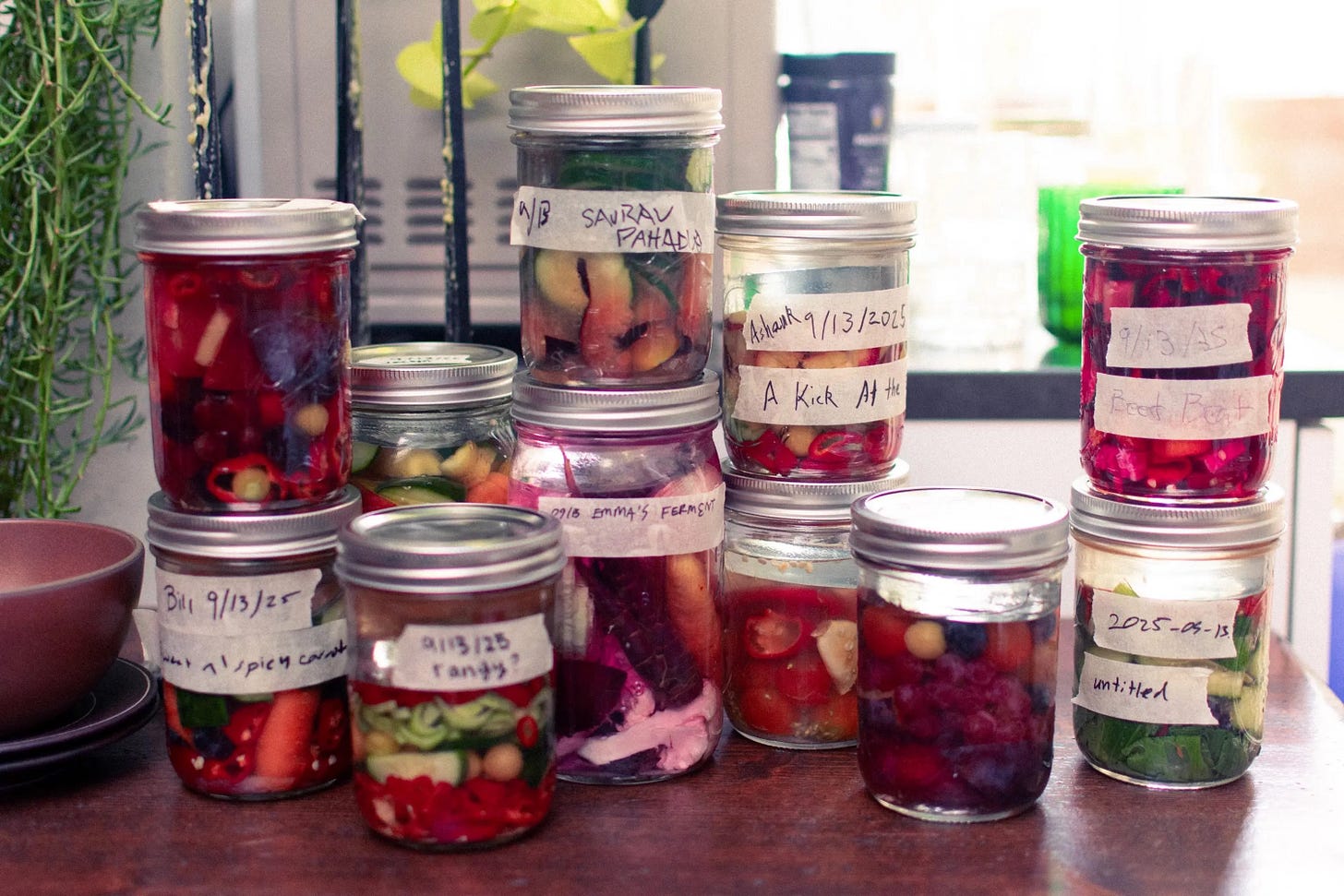
Last fall, I co-hosted a two-part fermentation workshop with Ben of Garnet1 and Joe of the Northeast Larder Project. In New York City, asking people to commit to an event not just one but two weekends in a row is a real ask. It ended up being both educational and socially nourishing — everything I want from a food event.
This year I’ve been treating events as social experiments, testing what kinds of containers for connection I can build. The fermentation workshop was the furthest outside my comfort zone: a ticketed event designed to start with theory and end with practice, with a week in between with required homework (burping the jars).
I wanted to host this workshop with Ben as part of my ongoing exploration how to bring people together, play with hosting formats and continue deepening my understanding of food systems.
Joe, who studies ancient foodways, opened with a crash course. Probiotics and natural wine are all the rage now but before refrigeration, fermentation was simply how people stretched the fall harvest through winter. A practice born from survival, not wellness. Kimchi, sauerkraut, miso, soy sauce, tofu — they are all fermented.
We started by going around the room sharing what fermentation meant to us. The words that came to mind for me were tangy, salty, spicy.
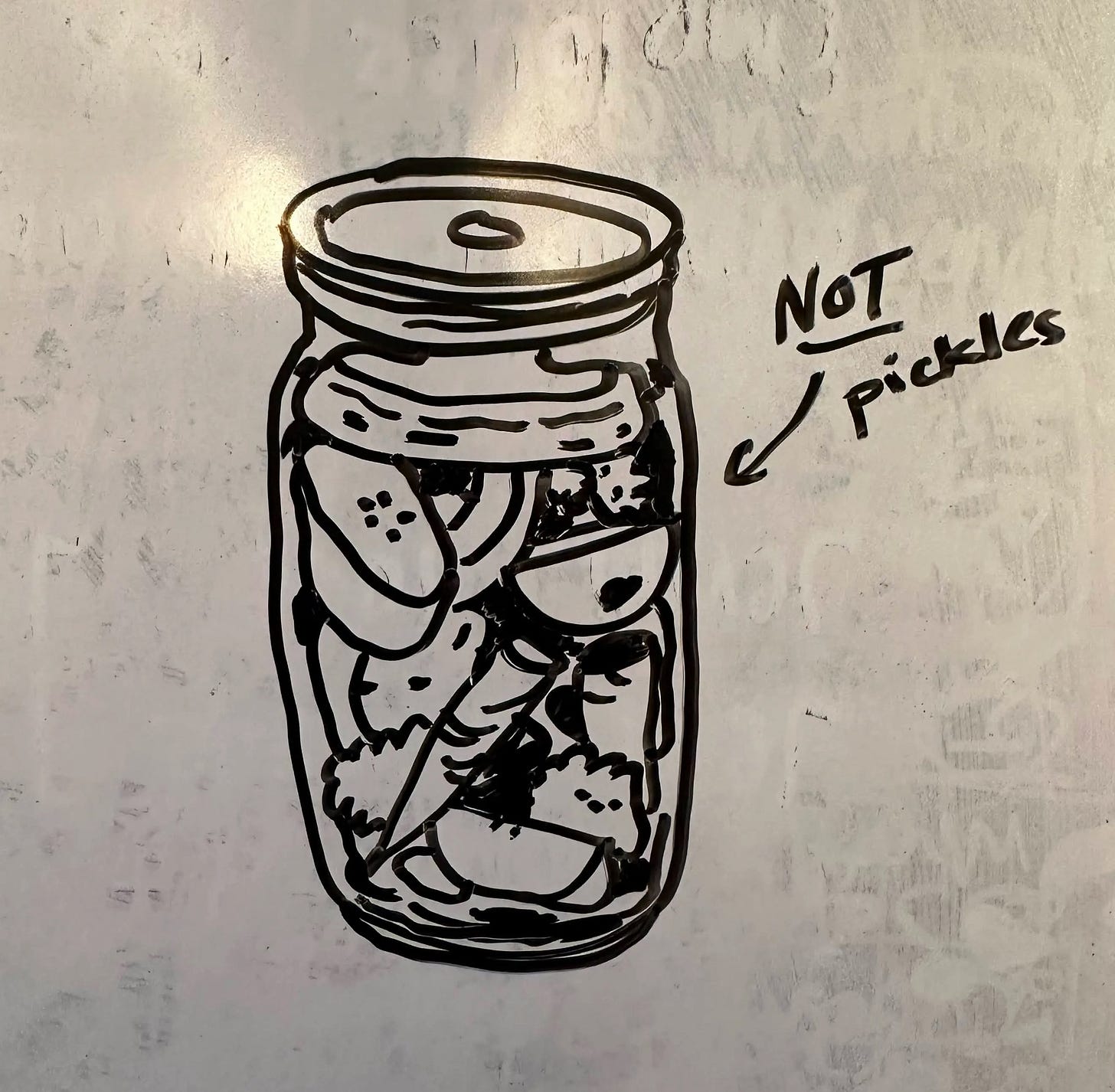
I’d always used “fermented” and “pickled” interchangeably until Joe explained the difference:
- Fermenting is when microbes turn sugar into acid — the acidity comes from the ferment itself.
- Pickling is when acidity is added externally, usually vinegar.
Natural wine is wild-fermented. Vinegar is too, though what you buy in stores is usually pasteurized for shelf stability.
Fermenting is, at its core, controlled rot.
You're letting one set of organisms outcompete another. The key variables are salt, sugar, temperature, light, time, and the material of the jar. For this workshop we focused on lacto-fermentation. Which meant we were not adding bacteria; we were shaping an environment that lets the right ones win.
How much salt to add is a tradeoff. More salt slows things down but keeps the ferment safe. This is different from a process like yogurt where the bacteria culture is introduced deliberately. Lacto-fermentation is a wild ferment which is riskier and yields funkier, more complex results.
What surprised me most was how little you need. Lacto-fermentation doesn't require precision instruments or specialized equipment. A kitchen scale and a mason jar will get you started. The most niche tool we used were fermentation weights to keep vegetables submerged below the brine.
This was our first ticketed food workshop, and we’d committed to providing everything: fruits, vegetables, kitchen scales, cutting boards, mason jars, food pairings for the second session. The goal was to design it like a course and treat attendees with a high bar of hospitality. No one could opt out because they didn’t have the right equipment or didn’t know what to bring. The only variable left was the people themselves.
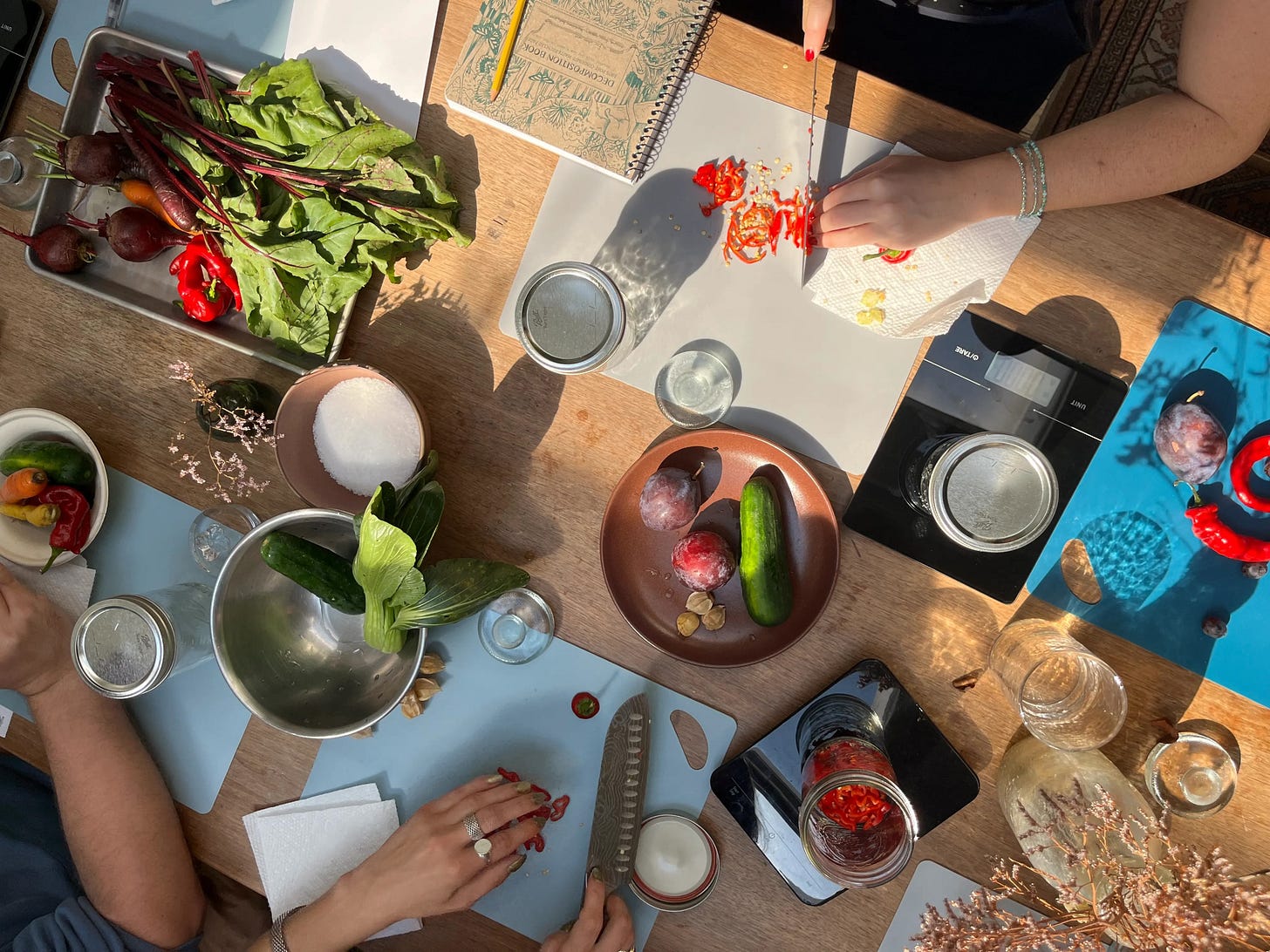
Ben and Joe had sourced a haul of fall produce from the Union Square Greenmarket. There were some usual contenders like cucumbers, carrots, peppers and cabbage and also some things I never would have thought to ferment like grapes, gooseberries. Everyone made their own brine at roughly three percent salinity and packed their jars to take home.
I left mine at the office, which became a running joke. On work-from-home days I'd Slack my coworkers to burp my jar for me. I neglected to warn them it might overflow, which it did… all over my desk.
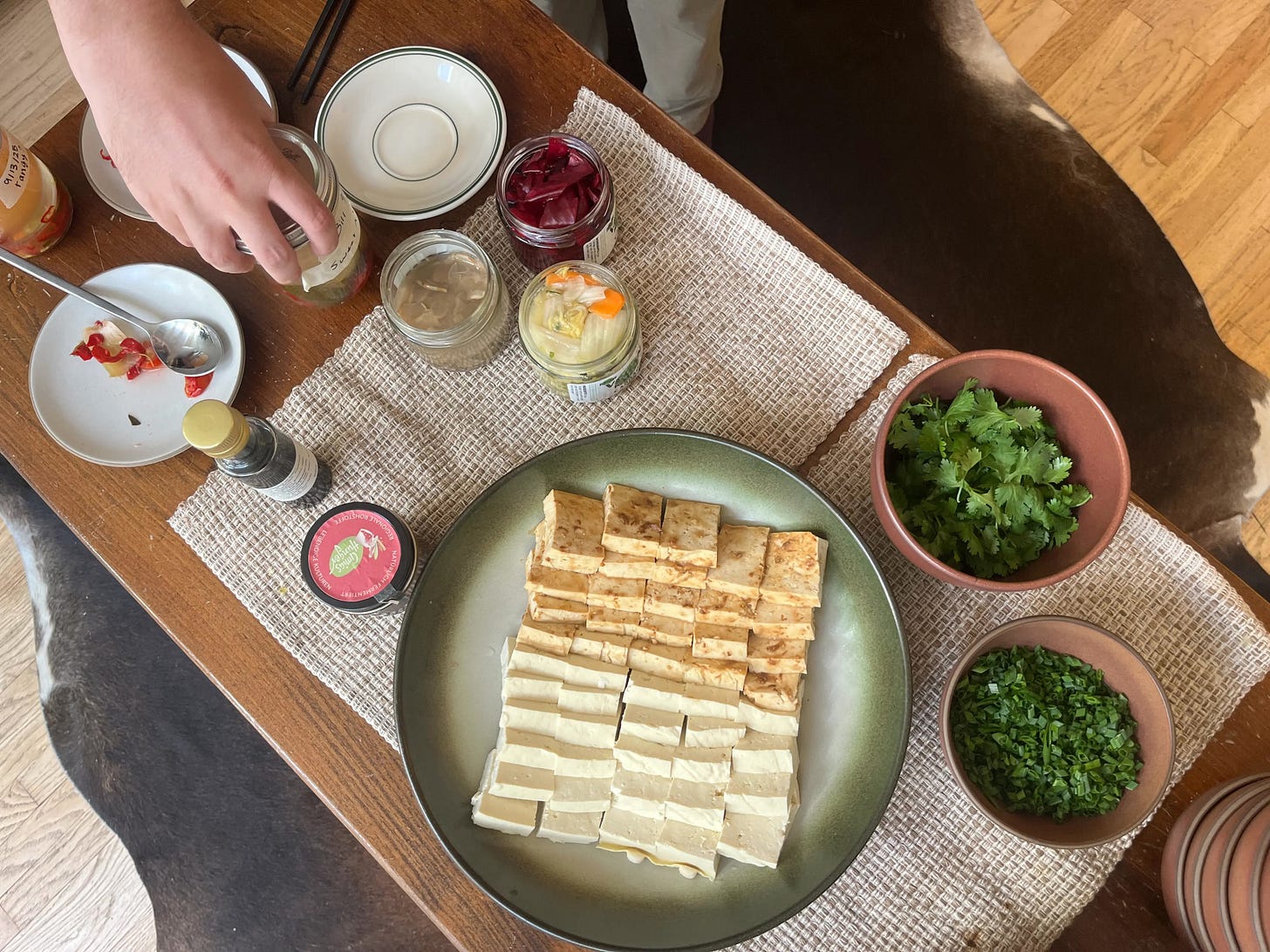
A week later we gathered again to open our jars. Joe and Ben did some QA2 on the jars to deem them safe for consumption before taste testing and discussing everyone’s ferment. One attendee had unfortunately dropped his jar during the week and came back to the second session empty handed.
They picked up tofu and rice cake desserts from Fong On, more vegetables from the market, and a pot of multigrain rice3. Almost everything on the table was fermented: soy sauce, miso, tofu alongside our own jars and a few they’d sourced themselves. We mixed the fermentation brine into the rice, which gave it this incredible brightness — almost like sushi rice, but funkier.
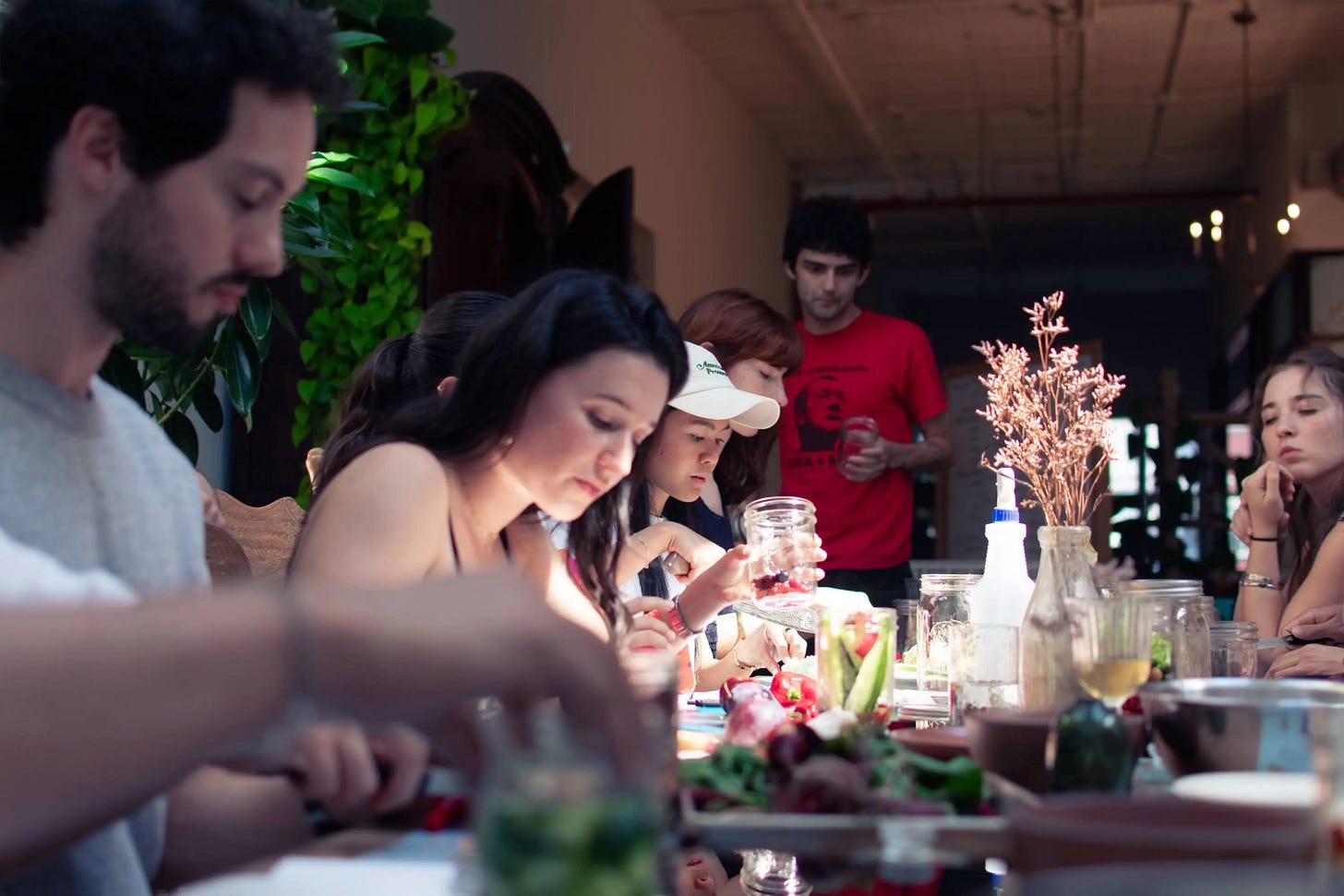
This experience was the first test of a multi-session event. I haven’t ran any of this format on my own but I do think there is a sense of community that forms in formats like this that I want to emulate more.
The first session gave everyone a shared vocabulary and familiarity; the second gave continuity. In a city where it often feels like you have to fight for a spot on someone’s calendar, asking people to return feels like a risk. It reminds me of what I learned running Cozy Sundays, a creative co-working series I’ve hosted for the last few years: regularity builds community in a way a single session can’t replicate.
1 Ben is working on Garnet, a restaurant and community space he will be opening in Brooklyn Heights later this year!
2 Quality assurance
3 We brought an Instant Pot without the cord and quickly learned that generic monitor cables also happen to be compatible with the instant pot and our rice was saved.